What is International Women’s Day and why is it important?
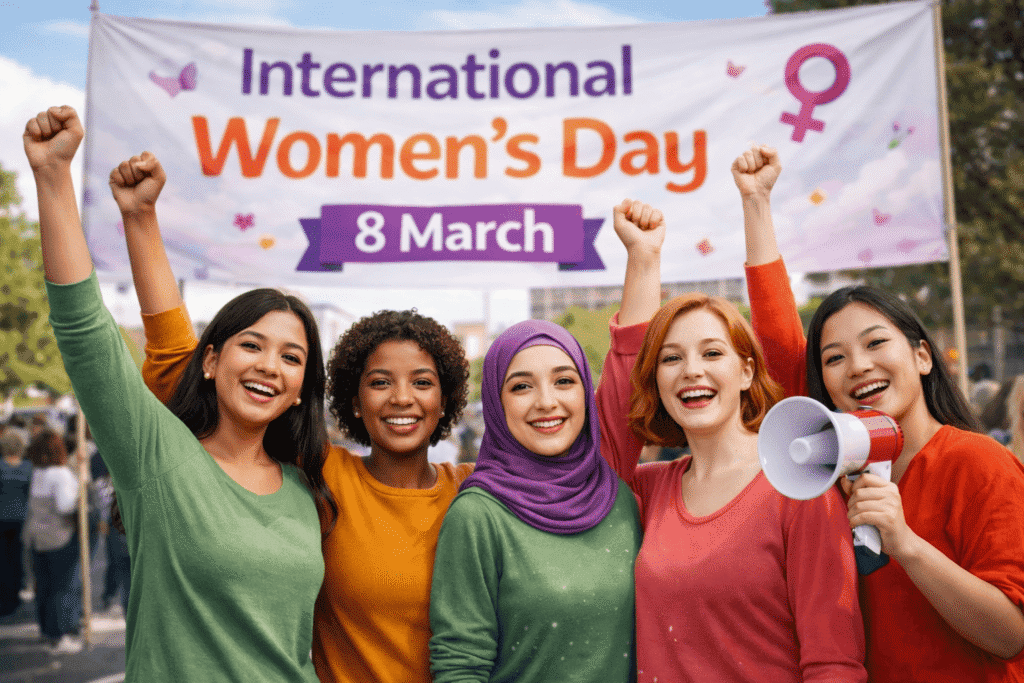
International Women’s Day is observed every year on 8 March around the world. The purpose of this day is to recognize women’s achievements, raise awareness about gender equality, and promote women’s rights in society. It is not only a celebration but also a reminder that the struggle for equality is still ongoing.
For many people, this day is about appreciation for women in families, workplaces, and communities. But from a social perspective, International Women’s Day is much more than that. It highlights issues like gender discrimination, women’s safety, equal pay, education opportunities, and leadership participation.
In simple words, the day reminds society that women deserve equal respect, equal rights, and equal opportunities. When local communities understand this message, real social change begins.
Why did International Women’s Day start?
The roots of International Women’s Day lie in the labor movements of the early 20th century. During that period, many women were working in factories under difficult conditions. They had long working hours, low wages, and very limited rights.
Women workers began organizing protests and movements demanding better working conditions and voting rights. These movements slowly grew into a larger global campaign for women’s equality.
One of the earliest important events took place in 1909 in New York, where women workers and activists organized a special day to raise awareness about women’s rights. This event inspired international activists to think about creating a global day dedicated to women.
So, International Women’s Day was born from real struggles for justice, not just symbolic celebrations.
How did International Women’s Day become a global movement?
The idea of celebrating a global women’s day gained international support in 1910 during the International Socialist Women’s Conference in Copenhagen. German activist Clara Zetkin proposed that a special day should be celebrated every year to promote women’s rights and equality.
Delegates from 17 countries supported the idea. The first large-scale celebration took place in 1911, when more than one million people participated in demonstrations across Europe.
Women demanded rights such as:
- The right to vote
- Equal employment opportunities
- Protection from workplace discrimination
- Better working conditions
These early protests helped build momentum for women’s movements around the world.
Why is 8 March chosen as International Women’s Day?
The date 8 March became officially linked to International Women’s Day because of events during the 1917 Russian Revolution.
Women textile workers in Petrograd organized a massive protest demanding “Bread and Peace.” They were protesting against war, food shortages, and social injustice. Their demonstration triggered wider protests that eventually contributed to political change.
Later, leaders recognized the importance of women’s role in that movement, and 8 March was officially adopted as International Women’s Day.
Since then, the date has been recognized globally.
How did the United Nations support International Women’s Day?
The global importance of International Women’s Day increased significantly when the United Nations (UN) began observing it officially.
In 1975, which was declared the International Year of Women, the United Nations celebrated International Women’s Day for the first time. Later in 1977, the UN invited countries around the world to observe the day as a day for women’s rights and international peace.
Today, the UN promotes the day through campaigns focused on issues such as:
- Gender equality
- Women’s leadership
- Economic empowerment
- Ending violence against women
Every year the UN announces a specific theme to guide global discussions and activities.
What is the theme of International Women’s Day 2026?
Every year International Women’s Day is celebrated with a theme that highlights key global issues related to women.
Although official announcements may vary, discussions for International Women’s Day 2026 are expected to focus on themes connected to:
- Gender equality in leadership
- Women’s economic empowerment
- Digital inclusion for women
- Ending violence and discrimination
Themes help governments, organizations, and communities focus on specific areas where improvement is needed.
Which organizations participate in International Women’s Day?
Many international and national organizations actively participate in International Women’s Day events and campaigns.
Important organizations involved include:
- United Nations (UN)
- UN Women
- NGOs working for women’s rights
- Educational institutions
- Government agencies
- Social organizations and community groups
These organizations organize seminars, awareness campaigns, workshops, and social programs that promote women empowerment and women right
How can youth contribute to International Women’s Day?
Young people play a very important role in the future of gender equality. When youth understand issues related to gender equality and women safety they can help build a more inclusive society.
Students and youth groups can participate by:
- Organizing awareness campaigns
- Promoting gender equality in schools and colleges
- Supporting women’s education
- Using social media to spread awareness
- Encouraging respect and equality in everyday life
When young generations actively support women’s rights, social change becomes stronger and more sustainable.
What is the global impact of International Women’s Day?
The global impact of International Women’s Day can be seen in many areas of society. Over the past century, women’s movements have achieved several important changes.
These include:
- Expansion of women’s voting rights
- Greater participation of women in politics
- Improved workplace rights
- Increased awareness about domestic violence and harassment
- Better access to education for girls
However, challenges still remain. In many parts of the world, women still face discrimination, limited economic opportunities, and safety concerns.
That is why International Women’s Day continues to serve as a global reminder that equality must remain a priority.
Why does gender equality still matter today?
Even in modern societies, gender inequality has not completely disappeared. Women still face barriers in areas such as:
- Leadership roles
- Wage equality
- Access to resources
- Safety and protection from violence
Promoting women empowerment means ensuring that women have the same opportunities as men in every field.
When women succeed, families become stronger, communities develop faster, and economies grow more sustainably.
How can society support women’s empowerment?
Real change requires action at many levels of society. Governments, organizations, families, and individuals all have a role to play.
Some important steps include:
- Promoting girls’ education
- Supporting women entrepreneurs
- Ensuring equal pay for equal work
- Strengthening laws against violence and discrimination
- Encouraging women’s leadership in politics and business
When these efforts work together, the goal of gender equality becomes achievable.
What lessons can be learned from International Women’s Day?
The history of International Women’s Day teaches an important lesson: social change happens when people raise their voices together.
The struggles of early women workers, activists, and reformers helped shape the rights many women enjoy today.
But the journey toward equality is not finished. Each generation must continue the work to ensure that women everywhere can live with dignity, freedom, and opportunity.
Conclusion
International Women’s Day is much more than a symbolic celebration. It is a powerful reminder of the long struggle for women’s rights and equality.
From early labor protests to global campaigns supported by the United Nations, the day represents a movement that continues to shape modern society.
As awareness grows and more people support women rights and women empowerment, the dream of true gender equality becomes more realistic.
International Women’s Day encourages everyone—governments, communities, youth, and individuals—to work together toward a future where every woman has equal rights, equal respect, and equal opportunities.
FAQ Section (For Article)
What is International Women’s Day?
International Women’s Day is celebrated every year on 8 March to recognize women’s achievements and promote gender equality, women’s rights, and social justice across the world.
Why is International Women’s Day celebrated?
International Women’s Day is celebrated to highlight issues such as women’s equality, women’s safety, education, economic empowerment, and equal opportunities in society.
When did International Women’s Day start?
The first International Women’s Day movement began in 1909 in the United States, and the idea of celebrating it internationally was proposed in 1910 at the International Socialist Women’s Conference in Copenhagen.
Why is International Women’s Day celebrated on 8 March?
The date 8 March was chosen to recognize the role of women workers during the 1917 Russian Revolution, when women protested demanding bread, peace, and better working conditions.
What is the role of the United Nations in International Women’s Day?
The United Nations officially recognized International Women’s Day in 1975 and promotes global campaigns every year focusing on women’s rights, equality, and empowerment.
How can youth participate in International Women’s Day?
Young people can support International Women’s Day by spreading awareness, supporting women’s education, promoting gender equality, and participating in social campaigns for women empowerment.