World NGO Day information
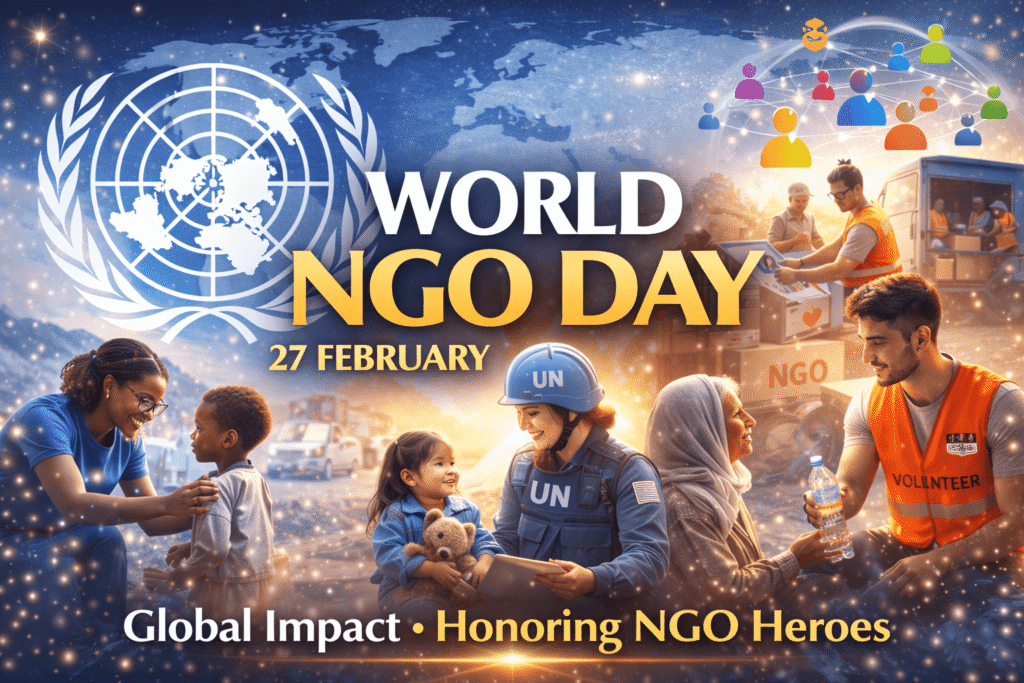
World NGO Day information is something many people search for when they want to understand why 27 February is recognized internationally. World NGO Day is observed every year on 27 February to recognize and honor the work of non-governmental organizations (NGOs) across the globe. It is a day dedicated to appreciating individuals and organizations that work tirelessly for social development, humanitarian relief, education, healthcare, environmental protection, and human rights.
In simple words, World NGO Day is about people helping people.
Across continents — from small rural communities in Africa to large urban centers in Europe and Asia — NGOs play a critical role in improving lives. This day reminds the world that meaningful change often starts at the grassroots level.
What Is World NGO Day?
To begin with, world ngo day information helps us understand that this day is not just symbolic. It is internationally recognized as a platform to:
- Celebrate NGO achievements
- Encourage collaboration between governments and civil society
- Inspire young people to engage in social causes
- Promote awareness about global challenges
NGOs operate independently from governments, though they may collaborate with them. Their primary goal is not profit, but service.
The day also strengthens dialogue between policymakers and social organizations. In many countries, NGOs serve as bridges between communities and authorities.
Why Is World NGO Day Celebrated on 27 February?
One important part of world ngo day information is understanding the date.
World NGO Day was officially recognized in 2010 by the Baltic Sea NGO Forum. Later, on 27 February 2014, the first global celebration took place. Since then, the date has been permanently observed worldwide.
The choice of 27 February symbolizes international cooperation. It marks the formal recognition of civil society organizations working together beyond borders.
Today, governments, universities, international institutions, and community groups organize events, seminars, and award ceremonies on this day.
The History Behind World NGO Day
The concept of World NGO Day was initiated by Marcis Skadmanis, a Latvian social entrepreneur. His vision was to create a global platform where NGOs could receive recognition and build partnerships.
The first large-scale international event was organized in Helsinki, Finland, in 2014. Representatives from the United Nations, European institutions, and global civil society networks participated.
Over the years, the observance spread to more than 90 countries. It became a symbol of organized civic engagement and global solidarity.
The history of World NGO Day shows that it was not created overnight. It evolved through years of advocacy and collaboration.
Understanding NGOs: What They Really Do
To fully grasp world ngo day information, we must understand what NGOs are.
NGO stands for Non-Governmental Organization. These are independent groups formed by individuals who aim to address social, environmental, cultural, or humanitarian issues.
They work in areas such as:
- Poverty alleviation
- Education access
- Public health awareness
- Women empowerment
- Child protection
- Climate action
- Disaster relief
Some NGOs operate locally in small villages, while others function internationally across continents.
Unlike businesses, NGOs do not exist to generate profit. Any funds they receive are reinvested into programs and services.
The Real Role of NGOs in Society
NGOs often reach places where government systems face limitations.
In remote communities, NGOs build schools.
In health crises, they provide medical supplies.
During disasters, they distribute food and shelter.
They act as a support system for vulnerable populations.
Additionally, NGOs monitor human rights, advocate policy changes, and conduct research that influences global decisions.
They are not perfect — no system is — but their contribution to development is undeniable.
World NGO Day and Youth Participation
Young people today want more than just career success. They want impact.
World NGO Day inspires youth to volunteer, donate, organize awareness campaigns, and even start their own community initiatives.
In many countries, student-led NGOs are tackling issues like mental health awareness, climate activism, and digital education access.
The message is simple: change begins with small steps.
Even sharing verified information online or participating in a community drive can make a difference.
Global Impact of NGOs
When we look at world ngo day information globally, we see enormous impact.
In Africa, NGOs support clean water projects.
In South Asia, they improve rural education systems.
In Latin America, they focus on indigenous rights.
In Europe, many NGOs work on refugee assistance.
International organizations like the United Nations collaborate closely with NGOs to achieve development goals.
Many UN programs depend on NGO partnerships for implementation at ground level.
Connection with Sustainable Development Goals
World NGO Day strongly aligns with the Sustainable Development Goals (SDGs) established by the United Nations in 2015.
These 17 goals include:
- No Poverty
- Quality Education
- Gender Equality
- Climate Action
- Peace and Justice
NGOs play a direct role in achieving these objectives.
For example:
- Education NGOs support SDG 4 (Quality Education).
- Environmental NGOs contribute to SDG 13 (Climate Action).
- Health NGOs help achieve SDG 3 (Good Health and Well-being).
Without NGOs, progress toward these goals would be much slower.
Why World NGO Day Matters Today
The relevance of World NGO Day has increased in recent years.
During global crises such as pandemics, natural disasters, and economic downturns, NGOs often respond faster than large institutions.
During COVID-19, thousands of NGOs distributed food kits, oxygen cylinders, medical supplies, and digital education support.
Climate change has also intensified humanitarian emergencies. NGOs are on the frontlines responding to floods, droughts, and displacement.
This day allows societies to express gratitude and reflect on collective responsibility.
Challenges Faced by NGOs
While NGOs contribute greatly, they also face significant challenges.
Funding limitations remain one of the biggest obstacles. Many organizations depend on donations and grants.
In some countries, regulatory restrictions limit their operations.
Transparency and accountability are also crucial. NGOs must maintain trust through ethical practices and proper reporting.
Digital misinformation is another growing concern. NGOs must fight fake narratives while delivering factual information.
The Economic and Social Contribution
NGOs contribute not only socially but economically.
They generate employment opportunities.
They train volunteers who later become skilled professionals.
They support small-scale entrepreneurship.
In many developing countries, NGOs help communities access microfinance and vocational training.
Their role strengthens local economies and builds resilience.
Celebrations Around the World
World NGO Day is celebrated differently across regions.
In some countries:
- Award ceremonies honor outstanding NGO leaders.
- Universities conduct panel discussions.
- Governments release appreciation statements.
In others:
- Volunteer drives are organized.
- Social media campaigns highlight community heroes.
The celebrations may vary, but the core purpose remains the same — recognition and collaboration.
How Individuals Can Participate
You do not need to start a large organization to participate.
Simple actions include:
- Volunteering locally
- Donating responsibly
- Sharing verified awareness content
- Participating in environmental drives
- Supporting ethical campaigns
Collective small actions create measurable impact.
Future of NGOs in a Changing World
As the world becomes more digital, NGOs are also transforming.
They use online fundraising platforms.
They conduct virtual awareness sessions.
They leverage data analytics to measure impact.
Artificial intelligence and digital tools are helping NGOs improve efficiency.
However, human connection remains central to their mission.
The future will require stronger partnerships between governments, businesses, and civil society.
Final Thoughts on World NGO Day Information
In conclusion, world ngo day information is not just about knowing a date — it is about understanding a movement.
World NGO Day, observed on 27 February, honors the millions of individuals who work silently for the betterment of society.
It reminds us that humanity grows stronger when cooperation replaces competition.
The day is dedicated to unsung heroes who serve without expecting recognition.
If each of us contributes even in small ways, the world can become more inclusive, just, and compassionate.
Because at the end of the day, NGOs are simply organized compassion in action.
And that is something worth celebrating.
Frequently Asked Questions (FAQs)
1. What is World NGO Day?
World NGO Day is an international observance celebrated every year on 27 February to recognize and honor the contributions of non-governmental organizations (NGOs) worldwide.
2. Why is World NGO Day celebrated on 27 February?
World NGO Day is observed on 27 February because the date was officially recognized in 2010 by the Baltic Sea NGO Forum, and the first global celebration took place on 27 February 2014.
3. Who started World NGO Day?
World NGO Day was initiated by Marcis Skadmanis, who proposed the idea to create an international platform for NGOs.
4. What is the purpose of World NGO Day?
The purpose of World NGO Day is to appreciate NGO workers, encourage collaboration between governments and civil society, and promote awareness about global social challenges.
5. How do NGOs contribute to global development?
NGOs contribute to global development by working in areas such as education, healthcare, poverty reduction, human rights, environmental protection, and disaster relief.
6. How is World NGO Day connected to the United Nations?
World NGO Day supports the Sustainable Development Goals (SDGs) established by the United Nations, as NGOs play a key role in implementing these global goals at the grassroots level.
7. How can individuals participate in World NGO Day?
Individuals can participate by volunteering, donating to trusted NGOs, spreading awareness on social media, or supporting local community initiatives.