
Introduction
In many societies today, we often notice that people are constantly busy, constantly connected online, yet emotionally distant. Messages are instant, but conversations feel shorter. Relationships exist, but depth sometimes disappears. In such times, Valentine’s Day and love appear like a small pause in the middle of our fast lives. It reminds us to slow down, to think, and to reconnect. Valentine’s Day is not just about celebration. It is about reflection. It asks us a simple question — are we really valuing the relationships that give us strength as human beings?
The History of Saint Valentine
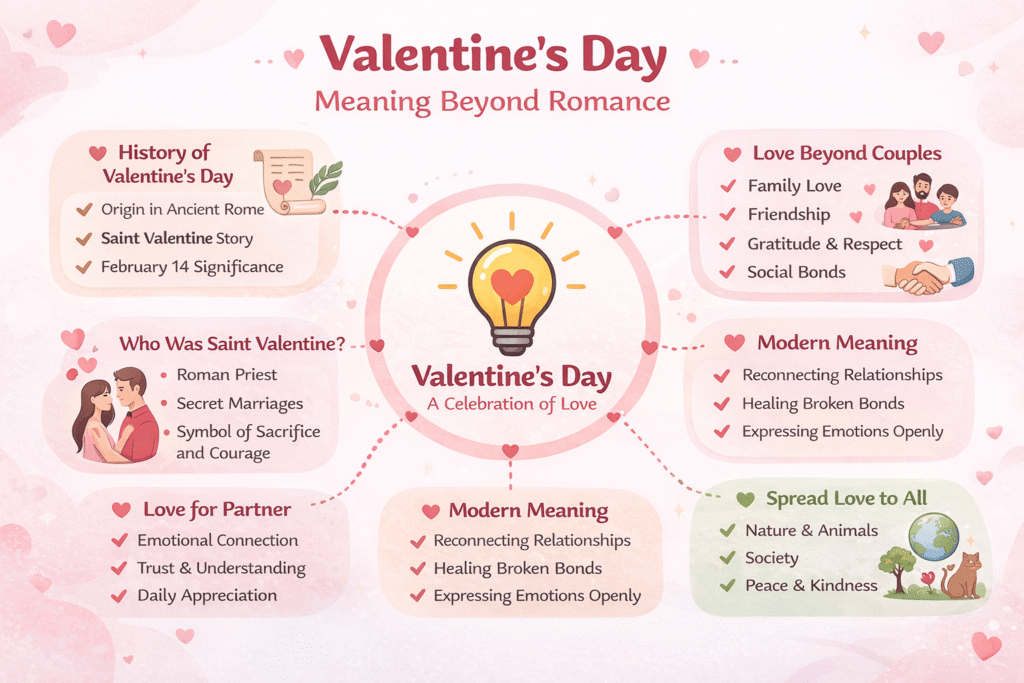
The origin of Valentine’s Day goes back to ancient Rome. One popular story speaks about Saint Valentine, a Christian priest who lived during the rule of Emperor Claudius II in the third century. The emperor believed unmarried men made stronger soldiers, so he banned marriage for young men. Saint Valentine quietly disagreed. He believed love and commitment were sacred.
He continued to perform marriages secretly. When his actions were discovered, he was imprisoned and later executed on February 14. Before his death, he is believed to have written a letter signed “From your Valentine.” Over time, this story turned into a symbol of courage, sacrifice, and belief in love. Valentine’s Day and love were therefore not born from commercial culture but from resistance and faith in human connection.
How the Meaning Changed Over Time
As centuries passed, Valentine’s Day slowly became connected with romantic love. In medieval Europe, poets began linking February 14 with courtship and affection. Later, in the 18th and 19th centuries, greeting cards and gifts became popular. Gradually, the emotional meaning of the day narrowed and focused mainly on couples. Today, red roses, chocolates, and candlelight dinners dominate the image of this celebration. There is nothing wrong with expressing romance. But sometimes we forget that Valentine’s Day and love are much broader than one relationship.
Love Between love partners
Romantic love between a love partners, is undoubtedly a beautiful part of this day. For couples, Valentine’s Day becomes an opportunity to express feelings that are often left unsaid. In daily routine, work stress and responsibilities reduce emotional conversations. This day allows partners to reconnect, appreciate each other, and remember why they chose each other. A simple dinner together, a thoughtful note, or even a quiet walk can strengthen the bond. Love partners need reassurance and gratitude just like any other relationship. Valentine’s Day and love give them a meaningful moment to renew commitment and emotional intimacy.
Beyond Romance: Love in Everyday Life
However, love should not remain limited to romantic partners. We love our parents, friends, siblings, teachers, and even colleagues. Many people silently support us throughout life. Valentine’s Day and love can also become a day to express gratitude to them. Imagine a young man working in a different city who rarely calls his mother because of his busy schedule. On Valentine’s Day, he decides to surprise her with a visit or even a long phone call. That simple gesture may create more happiness than any expensive gift. Love often hides in small acts of attention.
A Day to Repair Broken Bonds
In our short human life, ego damages many relationships. Small misunderstandings grow into silence. Pride stops communication. Valentine’s Day provides an excuse to break that silence. It gives us a socially accepted reason to say, “I value you.” Why not message an old friend? Why not forgive someone? Why not admit our own mistakes? Valentine’s Day and love can serve as bridges instead of boundaries. Sometimes healing begins with one honest sentence.
Love for Society and Nature
Love is not only personal; it can also be social. If we think deeply, caring for nature, helping animals, and supporting community efforts are also expressions of love. In a world facing environmental crises and social divisions, compassion becomes even more important. What if Valentine’s Day included planting a tree, feeding a stray animal, or donating to someone in need? Such actions expand the meaning of Valentine’s Day and love beyond personal relationships and turn it into social responsibility.
Mental Health and Emotional Connection
Modern life has increased stress and loneliness. Even in crowded cities, many people feel isolated. Social media shows celebration, but behind screens there may be emotional emptiness. Valentine’s Day and love remind us that human connection is essential for mental health. A real conversation, eye contact, and shared laughter cannot be replaced by digital messages. When people feel loved and valued, they experience emotional stability. This is not just emotional thinking; psychology also supports this idea.
Commercial Celebration vs True Meaning
The commercialization of Valentine’s Day is often criticized. But gifts are not the problem. The real question is intention. An expensive present without sincerity feels empty, while a simple handwritten letter can carry deep meaning. Valentine’s Day and love should not become competitions of spending. They should become moments of genuine expression. Celebration is beautiful when it carries emotion, not pressure.
A Global Celebration of Love
Different countries celebrate this day differently. In Japan, women give chocolates. In Finland, the day focuses on friendship. In many Latin American countries, it is called the Day of Love and Friendship. These variations show that Valentine’s Day and love adapt to cultures, yet the emotional foundation remains universal. Across borders, languages, and traditions, humans understand affection and appreciation. Love becomes a global language.
Conclusion
From everyday observations, it becomes clear that people desire connection more than success or material comfort. We want to be understood. We want to feel important in someone’s life. Valentine’s Day is only one date on the calendar, but its message is timeless. If we limit it to gifts, it remains small. If we use it to heal, forgive, reconnect, and spread kindness, it becomes powerful.
Valentine’s Day and love are not about one evening. They are about choosing empathy over ego, understanding over anger, and connection over distance. Perhaps this year we can celebrate differently — with sincerity, with courage, and with a broader heart. Because love is not just for couples. It is for humanity. And if we truly practice it, even insmall ways, we move one step closer to building a more compassionate and peaceful world.
Frequently Asked Questions (FAQs)
1. What is the true meaning of Valentine’s Day?
The true meaning of Valentine’s Day is not limited to romantic relationships. It represents love, gratitude, compassion, and the courage to value human connection in all forms.
2. Who was Saint Valentine?
Saint Valentine was a Christian priest in ancient Rome who secretly performed marriages when they were banned by Emperor Claudius II. He is remembered as a symbol of sacrifice and commitment to love.
3. Is Valentine’s Day only for couples?
No, Valentine’s Day is not only for couples. It can be celebrated with friends, parents, siblings, teachers, and even through acts of kindness toward society and nature.
4. Why is Valentine’s Day important in modern society?
In today’s fast-paced world, Valentine’s Day reminds people to reconnect emotionally, repair broken relationships, and express appreciation openly.
5. How can Valentine’s Day be celebrated differently?
It can be celebrated by spending meaningful time with loved ones, forgiving someone, helping a person in need, planting a tree, or simply expressing honest gratitude.
6. How does Valentine’s Day support emotional well-being?
Expressing love and appreciation strengthens relationships and improves emotional stability, reducing feelings of loneliness and stress.