What is Evolution
Evolution is a continuous process — it never stops. It is the natural cycle of creation, change, and transformation. While evolution is often thought of in biology, it is not limited to living creatures. Everything on Earth, including human society, culture, and knowledge, evolves over time.
Through evolution, old systems change, and new ways of thinking, behaving, and living emerge. This process helps the world move toward improvement and completeness.
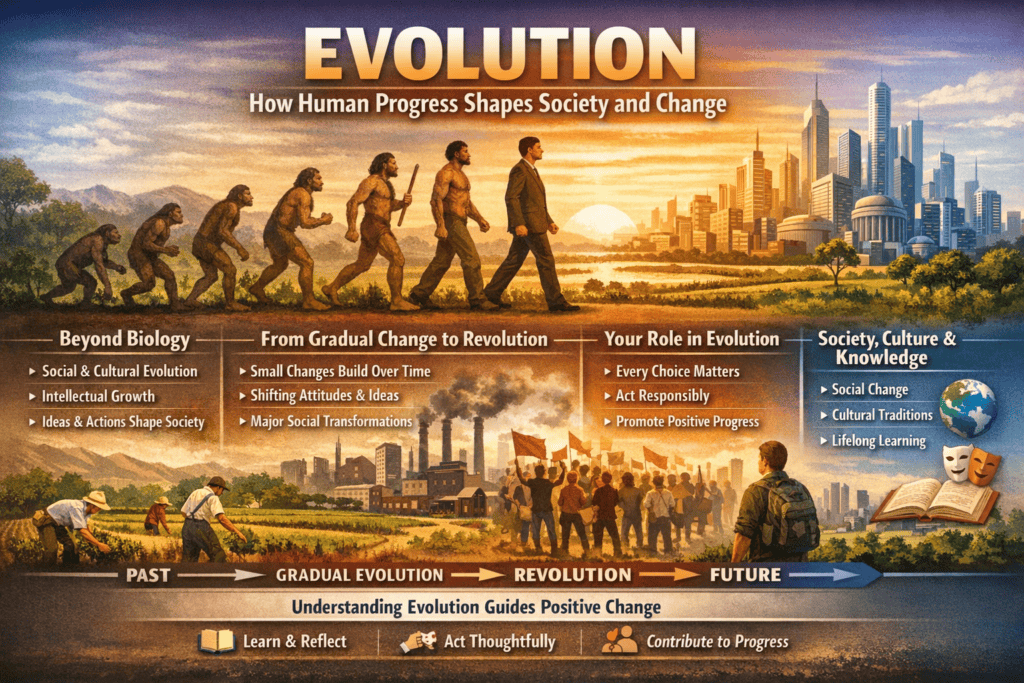
Human Evolution Beyond Biology
Humans have progressed more than any other species in intelligence and reasoning.
- Biological evolution is just one part of our growth.
- Social, cultural, and intellectual evolution also matters.
- Our thoughts, actions, and decisions influence society’s progress.
By understanding evolution beyond biology, we can see how human ideas and behaviours shape the world around us.
How Evolution Leads to Social Change
Evolution is gradual. Revolutions and sudden changes often appear to happen overnight, but they are the result of many small changes over time.
- Multiple factors contribute to social transformation.
- Gradual change allows rules and structures to form.
- Revolutions are visible signs of deeper, invisible evolution.
For example, a new law or social movement usually comes after decades of changing attitudes, discussions, and experiments.
The Role of Each Individual
Every person is part of the evolutionary process.
- Your choices and actions influence society.
- Responsible behaviour strengthens positive progress.
- Careless or harmful actions can disrupt social harmony.
Human evolution is not just about survival; it is about improving society and creating opportunities for others. We all participate, consciously or unconsciously, in shaping human progress.
Evolution in Society, Culture, and Knowledge
Human evolution is more than biology. It includes:
- Society: how people interact, the norms we follow, and the institutions we build.
- Culture: art, language, and traditions that carry knowledge across generations.
- Knowledge and learning: education, media literacy, and awareness that guide informed decisions.
These layers of evolution interact with each other. A change in culture can affect society, and new knowledge can influence both culture and social structures.
Lessons for Today
- Evolution is slow, not sudden. Temporary changes rarely create long-lasting impact.
- Small, consistent improvements in society, governance, education, and culture build stronger foundations.
- Awareness and thoughtful action help humans align with the natural flow of change.
Understanding evolution allows individuals to make choices that are supportive rather than destructive for society.
Continuous Evolution and Human Responsibility
Evolution is ongoing. Humans must act responsibly, not only to survive but to improve society.
- Revolutions and major societal shifts are signs of deeper evolutionary processes.
- Each generation must contribute to positive change — in ideas, actions, and social structures.
- Evolution combines human effort with natural processes to shape a better, more thoughtful world.
By participating consciously, humans ensure that evolution is constructive, inclusive, and sustainable.
Summary
- Evolution is a continuous, unending process.
- Human progress involves biology, society, culture, and knowledge.
- Every individual contributes to social transformation.
- Gradual change leads to revolutions and lasting impact.
- Responsible thought and action guide positive evolution.